


Why tools are important, but do not solve everything
In the digital environment, you often hear: «We work on such-and-such stack — that means we are strong». In practice, tools alone guarantee nothing. The same set of services in different teams can yield completely different results.
Nevertheless, tools matter because they:
- shape the speed of work;
- affect the quality of communication;
- reduce the number of errors;
- make processes predictable.
In this article, we will discuss which tools we use in our work and why we chose them, without attempting to cover everything and without «universal recommendations».
Principle of tool selection
Our basic principle is simple: the tool should enhance the process, not complicate it.
When choosing, we look at:
- tool maturity;
- stability and support;
- scalability;
- ease of use for the team and the client;
- integration with other services.
We do not chase trends and do not change the stack for the sake of change. If the tool works and solves the problem — it stays.
Analytics and Design Tools
Work on the project begins long before design and development.
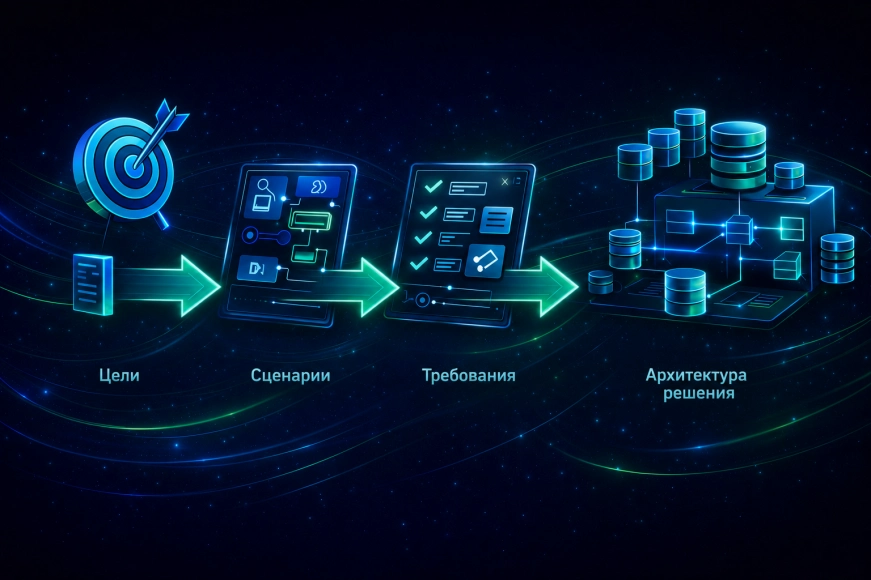
We use tools for:
- capturing requirements;
- describing user scenarios;
- structuring product logic;
- aligning expectations.
This allows:
- to avoid misunderstandings;
- to reduce the number of revisions;
- to move faster to implementation.
Design and UX/UI
In design, it is important for us not only to have visual quality but also:
- systematic approach;
- scalability;
- ease of maintenance.
We use design tools for:
- interface design;
- creating design systems;
- collaborative work;
- transfer of solutions to development.
A good design tool helps bridge the gap between the designer and the developer, rather than widening it.
Development and code quality control
In development, we use tools that:
- speed up work;
- reduce the number of errors;
- simplify code maintenance;
- help scale the product.
This applies to:
- version control systems;
- code review tools;
- automation of checks;
- quality standards.
We believe that readable and predictable code is part of the product, not "internal kitchen".
Testing and Stability
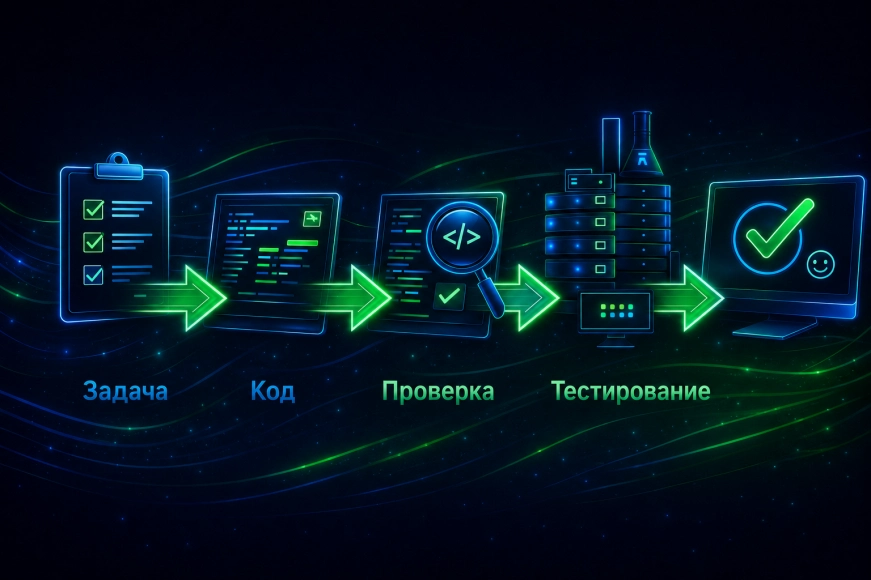
Testing is not the final stage, but part of the process.
We use tools for:
- manual and automated testing;
- user scenario testing;
- regression detection;
- stability control.
This allows us to identify problems earlier and reduce the cost of fixing them.
Project Management and Communication
Even a strong team can "break" a project without proper communication.
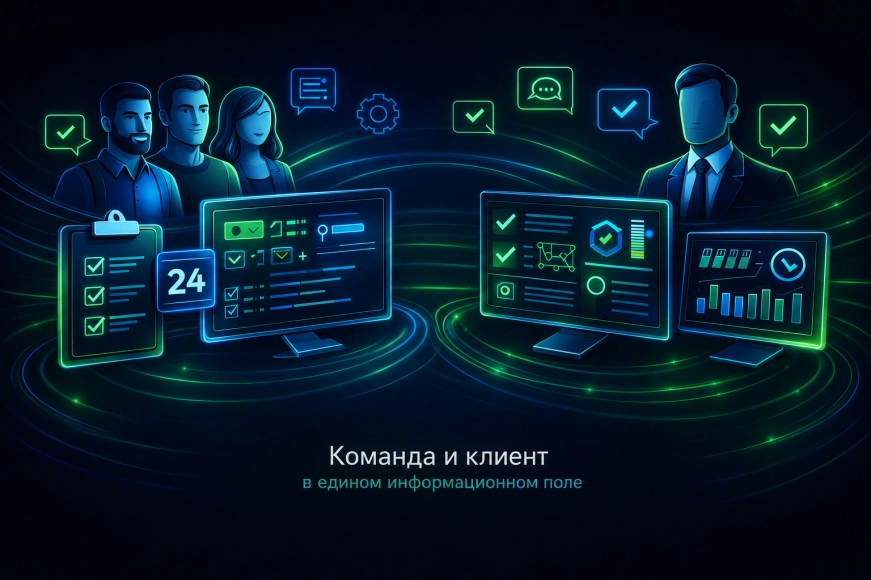
We use tools for:
- task management;
- stage planning;
- recording agreements;
- transparent communication with the client.
The key task is to ensure that:
- everyone understands the current status;
- solutions are not lost;
- expectations match reality.
Infrastructure and Automation
For complex and long-lived products, we use tools that help:
- automate builds;
- simplify deployment;
- increase stability;
- release updates faster.
Automation reduces dependence on manual operations and decreases the number of human errors.
Why we do not publish a "complete list of services"
We consciously do not make a long list of specific tool names for one reason:
the tool is always secondary to the task.
In different projects, the set may vary:
- by scale;
- by requirements;
- by budget;
- by product stage.
Much more important:
- how the tool is integrated into the process;
- who and how uses it;
- what solutions it supports.
How we approach working with tools
Our approach:
- first the process and goal;
- then the selection of tools;
- regular review and optimization;
- abandoning the unnecessary.
We do not cling to tools "forever," but we also do not change them without good reason.
The RUSO team considers tools as part of the overall work system, not as an end in itself.
Conclusions
The tools we use help:
- work faster;
- reduce risks;
- maintain quality;
- scale projects.
But the main tool is the experience, thinking, and processes of the team.
It is these that we consider the key value in working on digital products.