


Why integrations are the foundation of scalable e-commerce, not an "additional option"
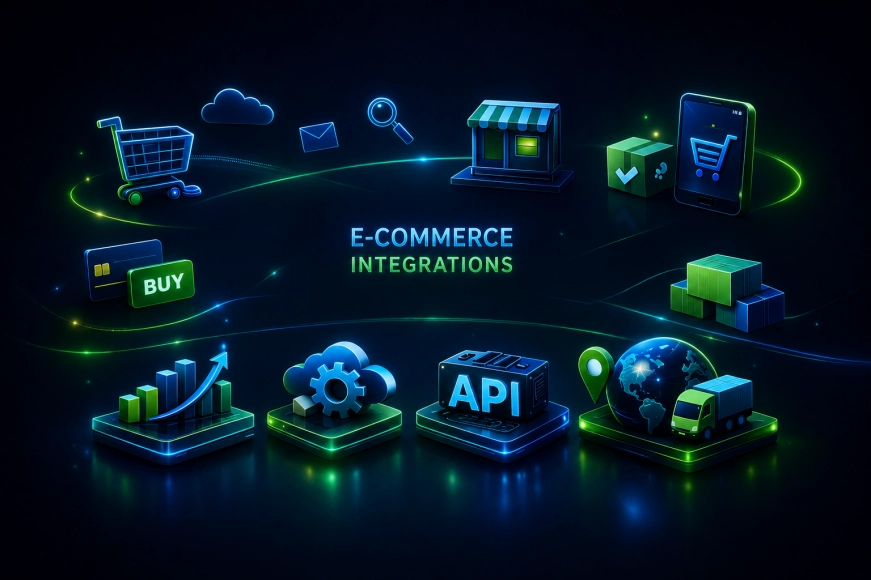
In 2026, e-commerce is no longer just an online store with a catalog and a cart. It is a complex ecosystem where sales, inventory, logistics, marketing, finance, and analytics must work as a single organism. And it is integrations that connect all these elements together.
In practice, most problems in e-commerce projects arise not from design or functionality, but from the absence or incorrect architecture of integrations. When data is transferred manually, systems are not synchronized, and businesses make decisions based on incomplete information, growth inevitably slows down.
In this article, we will discuss:
- which integrations are critical for e-commerce;
- which mistakes are most often made during their implementation;
- how to approach integrations so that they do not become a source of technical debt.
What are integrations in the context of e-commerce
Integrations — are not just «data exchange between systems». In e-commerce, they provide:
- relevance of information;
- data integrity;
- process automation;
- reduction of errors;
- speed of decision-making.
In fact, integrations turn a set of separate services into a managed digital platform.
Key types of integrations for e-commerce projects
1. Integrations with payment systems
Payments — a critical point in the user journey. Any mistakes here directly impact revenue.
Standard integrations:
- bank acquiring;
- payment aggregators;
- installments and BNPL services;
- returns and partial write-offs.
It is important to consider not only payment but also the correct handling of statuses, errors, and returns.
2. Integrations with warehouse and inventory management
One of the most common problems in e-commerce is inventory discrepancies.
Integrations with warehouse systems allow:
- to display current stock;
- to manage reservations;
- to synchronize order statuses;
- to reduce the number of cancellations and returns.
The higher the turnover, the more critical the accuracy of this data.
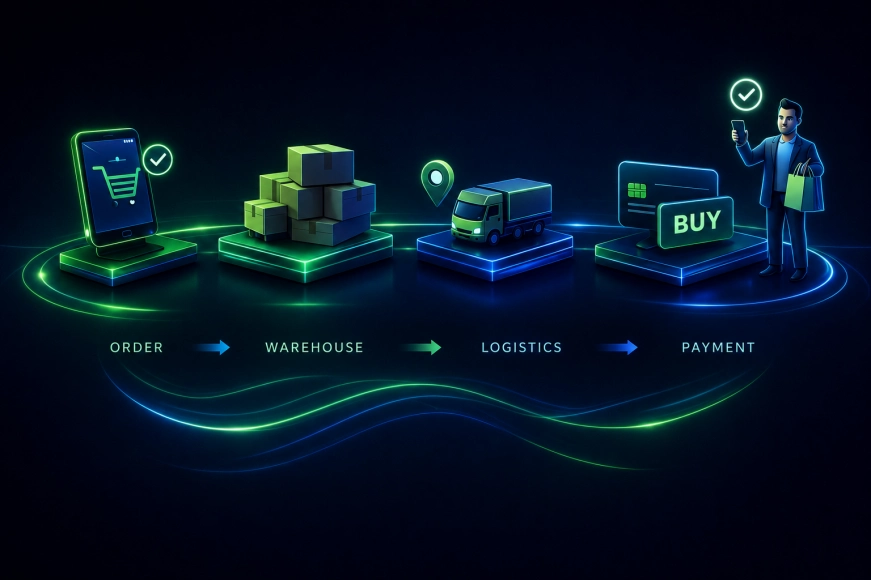
3. Integrations with logistics and delivery
The user expects:
- accurate delivery times;
- transparent statuses;
- the ability to choose delivery options.
For businesses, integration with logistics provides:
- automation of cost calculation;
- order status updates;
- reduction of support load;
- fewer manual operations.
4. Integrations with CRM and client systems
CRM — is a customer relationship management center.
Integrations allow:
- to see order history;
- to segment customers;
- to launch personalized communications;
- to increase LTV.
Without proper integration, CRM becomes an isolated tool rather than a source of value.
Table 1. Key e-commerce integrations
|
Integration |
What business gets |
|
Payment systems |
Stable revenue |
|
Warehouse and accounting |
Current balances |
|
Logistics |
Transparent delivery |
|
CRM |
Growth of LTV and loyalty |
|
Analytics |
Managed Solutions |
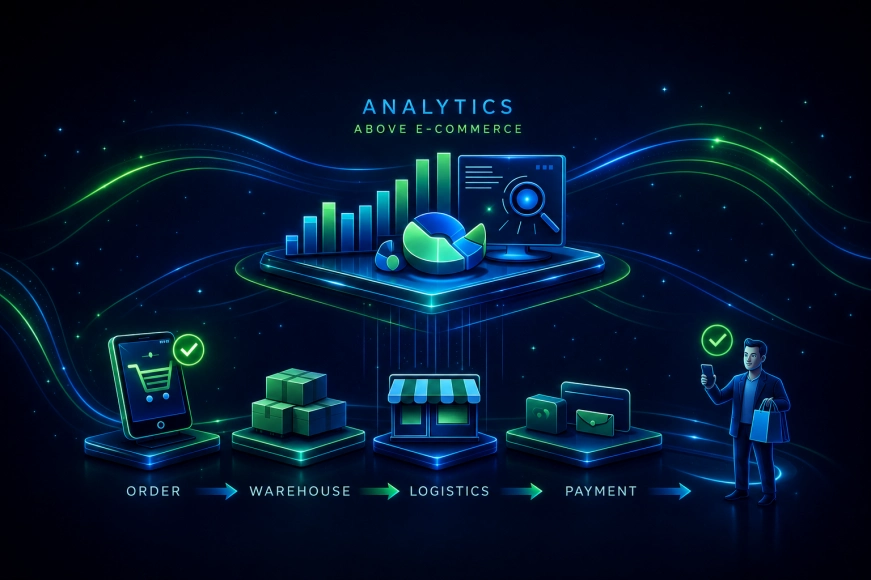
Integrations with Marketing and Analytics Systems
Without e-commerce analytics, management is done «blindly».
Key Integrations:
- Web Analytics Systems;
- CDP and DMP;
- Advertising Platforms;
- Personalization Systems.
They allow:
- track user journey;
- evaluate channel effectiveness;
- optimize the sales funnel;
- make data-driven decisions.
Architectural Approaches to Integrations
One of the main mistakes is to build "point-to-point" integrations without a common architecture. This approach quickly leads to chaos and complicates system development.
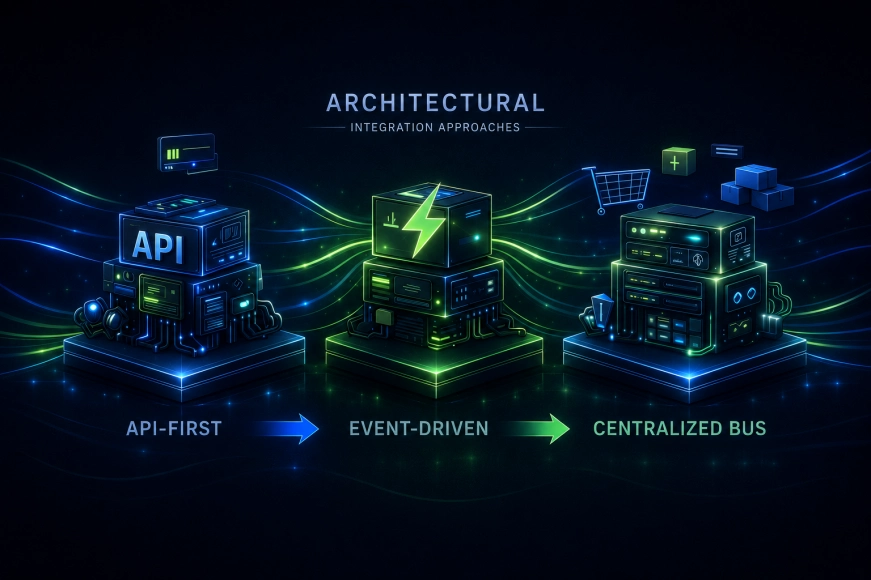
Mature e-commerce projects use:
- API-oriented architecture;
- data pipelines or event-driven approach;
- asynchronous queues;
- unified data contracts.
Our team in such projects always considers integrations as architectural layer, not a set of disparate connections.
Table 2. Approaches to Integrations
|
Approach |
Result |
|
Point-to-point |
Fast but unstable |
|
API-first |
Flexibility and scalability |
|
Event-driven |
Resilience and fault tolerance |
|
Centralized bus |
Control and extensibility |
Common mistakes in integration implementations
- Lack of unified architecture
- Tight coupling of systems
- Ignoring errors and retries
- Lack of logging and monitoring
- Quick-and-dirty integrations
Each of these mistakes increases technical debt and complicates project development.
Integrations and e-commerce growth
As the business grows:
- the number of orders increases;
- the load on systems is increasing;
- new sales channels are emerging;
- logistics is becoming more complex.
Without properly structured integrations, growth turns into a source of problems rather than an advantage.
How to approach integrations consciously
A mature approach includes:
- designing integrations before development begins;
- describing data flows;
- selection of resilient protocols;
- establishment of monitoring and logging;
- testing for fault tolerance.
Integrations should support the business, not be a source of constant failures.
Conclusions
Integrations for e-commerce are the foundation of scalability, resilience, and efficiency of the business. In 2026, the projects that win are those that:
- build integrations consciously;
- think architecturally;
- automate key processes;
- work with data, not assumptions.
An online store without integrations is an isolated tool. Integrated e-commerce is a full-fledged digital platform.