


Why the work process is as important as the result
When a client chooses an agency, they often look at the portfolio and technologies. But in real projects, the decisive factor becomes not the stack or the design, but how the work process is structured.
A project can be:
- with a good idea but poor implementation;
- with a strong team but chaotic management;
- with the right technologies but missed deadlines.
We are convinced that a stable result is only possible when the work process:
- is transparent;
- is structured;
- adapted to the project type;
- understandable to all participants.
In this article, we will discuss how we work on projects, which stages we consider critical, and why this approach reduces risks for the client.

Project Start: Understanding the Task, Not Just the Terms of Reference
Work on the project begins not with development and not even with design. The first stage is dive into the task.
At the start, we focus on:
- business goals;
- product context;
- constraints;
- expectations regarding the outcome;
- success criteria.
If there is no clarity at this stage, the project will almost certainly face:
- changing requirements;
- scope creep;
- conflicts of expectations.
Therefore, we always strive to agree not only on what to do but also why.
Team formation for a specific project
We do not operate on the principle of a "universal team for all occasions".
For each project, a team is formed that corresponds to:
- task complexity;
- product type;
- development stage;
- requirements for speed and quality.
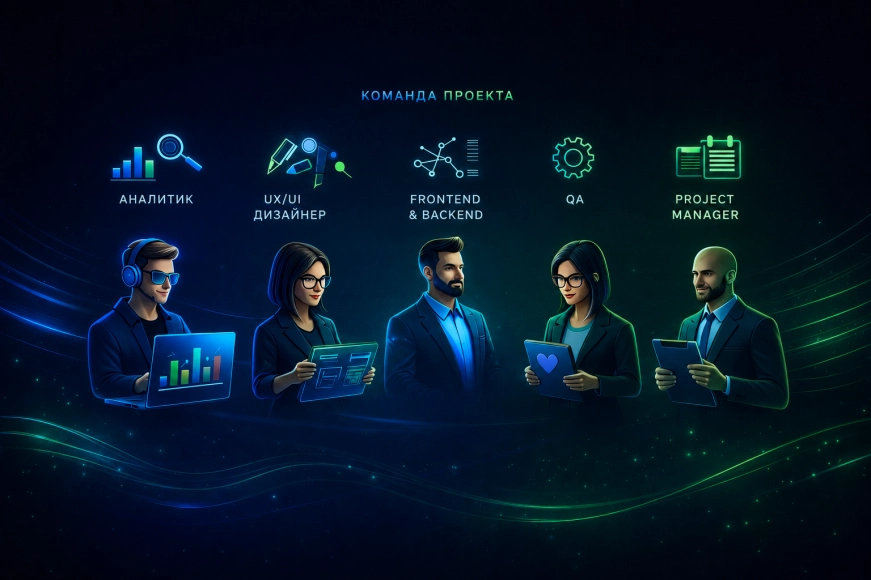
The project may include:
- analyst;
- UX/UI designer;
- frontend and backend developers;
- QA;
- project manager.
This approach allows us to avoid redundant roles and focus on the result.
Planning and Staging
We adhere to the principle: better a clear plan than an illusion of flexibility.
At the planning stage:
- we break the project into logical stages;
- we fix the key results of each stage;
- we define control points;
- we agree on the format of communication.
Even in flexible work models (Scrum, Kanban), having a structure allows:
- forecast deadlines;
- manage risks;
- avoid chaos.
Transparent communication with the client
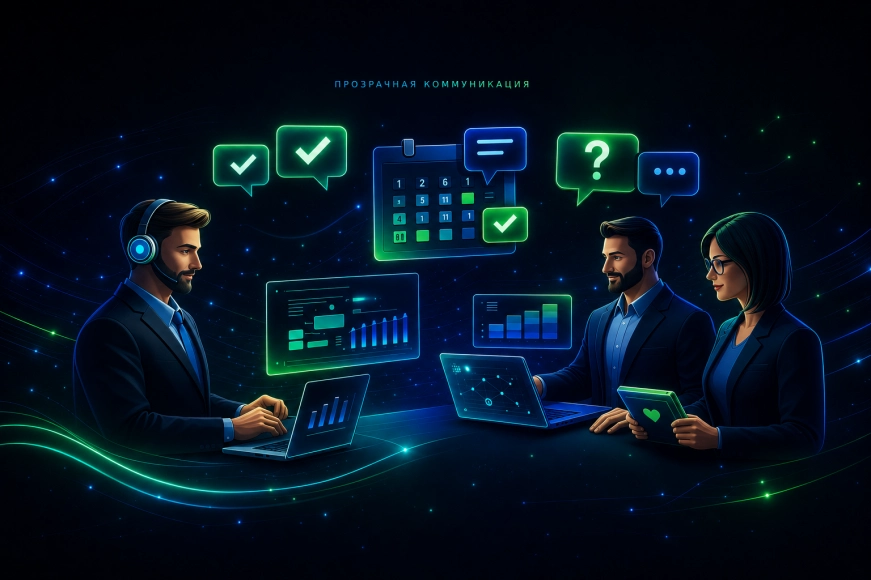
One of the most common reasons for problems in projects is the lack of regular and honest communication.
We organize our work so that the client:
- understands what stage the project is at;
- sees progress;
- knows about risks in advance;
- can influence priorities.
Communication — is not reports for the sake of reports, but a tool for managing expectations.
Implementation: quality and predictability
At the implementation stage, we focus not on speed for the sake of speed, but on:
- the quality of solutions;
- the stability of architecture;
- the clarity of code;
- the readiness of the product for development.
We do not consider normal:
- «to finish later»;
- sacrificing architecture for the deadline;
- accumulating technical debt without realizing the consequences.
The project must be ready not only for launch but also for life after it.
Testing and Quality Control
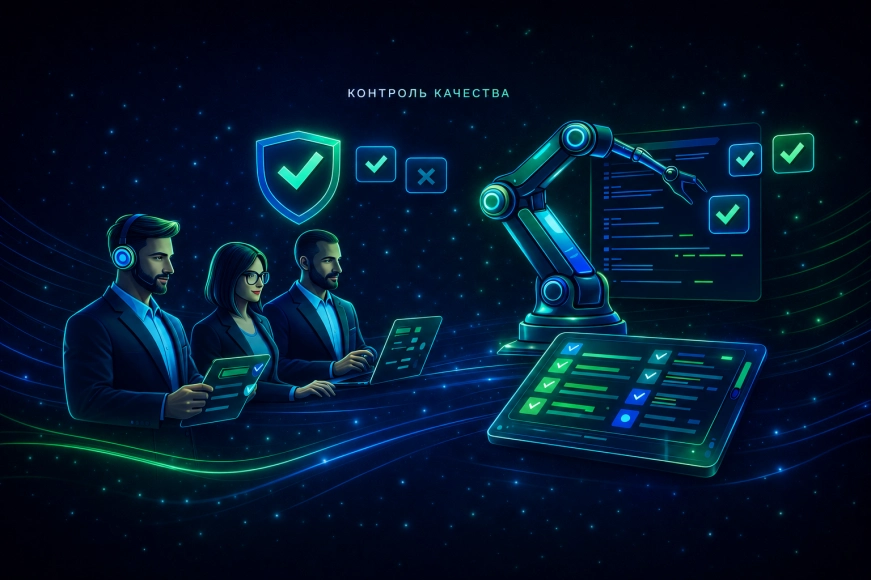
Testing is integrated into the process, not pushed to the end.
We check:
- the correctness of functionality;
- compliance with requirements;
- user scenarios;
- the stability of solutions.
This allows:
- to identify errors earlier;
- to reduce the cost of corrections;
- to avoid critical problems at release.
Release and Further Work
For us, the release is not the end, but a transition point.
After the launch, we:
- analyze the results;
- collect feedback;
- fix growth areas;
- plan the next iterations.
Many projects are transitioning to the format:
- long-term support;
- development;
- product partnership.
Why this approach works
Our approach allows:
- to reduce risks;
- keep the project under control;
- speak the same language as the client;
- make decisions consciously;
- build long-term cooperation.
We do not strive to «do it quickly at any cost». For us, it is more important that the result is:
- sustainable;
- clear;
- ready for development.
Conclusions
Working on projects is not a set of tools and methodologies, but a system of interaction between people, processes, and goals.
We build this system so that:
- the client understands what is happening;
- the team works efficiently;
- the product develops without chaos.
This approach, in our opinion, allows for the creation of digital products that work and grow.