


Why deadline forecasting is a management task, not a guess
Forecasting development timelines is one of the most complex and simultaneously critical tasks in managing IT projects. Mistakes in estimates directly affect client trust, budget, team workload, and the final product quality.
In 2026, deadline forecasting is no longer a "guess estimate" or a promise of "plus or minus a week." It is a managed process that relies on data, task structure, team maturity, and transparent communication.
It is important to understand: exact deadlines do not exist, but there is a range of probabilities that can and should be managed.
Why deadlines almost always fail
Before discussing forecasting, it is important to identify the main reasons for deadline failures. Practice shows that they are rarely related to "bad developers."
Most often, deadlines "float" due to:
- unfixed scope of work;
- changes in requirements during the project;
- underestimation of integrations and dependencies;
- hidden technical debt;
- lack of buffers for risks;
- pressure on the team to "speed up".
Forecasting deadlines breaks down where there is a lack of structure and transparency.
Decomposition is the foundation of any forecast
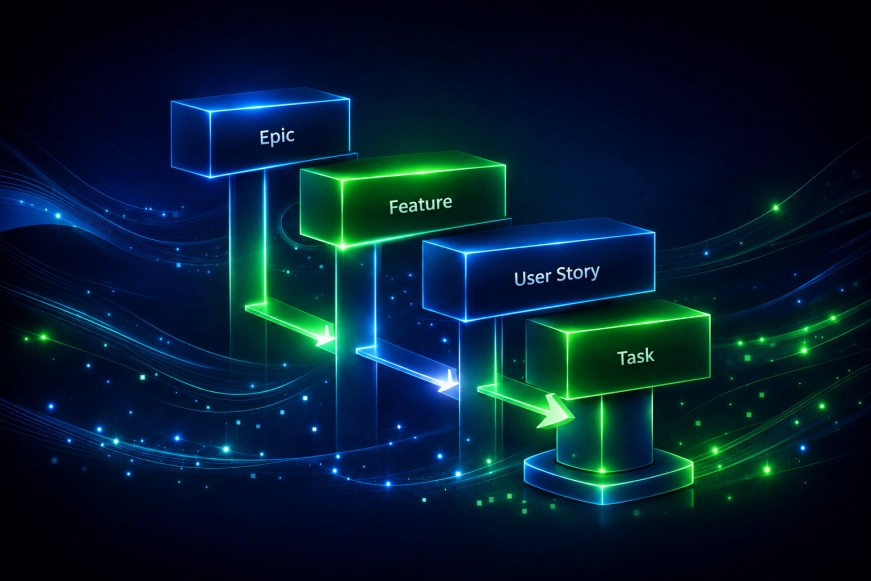
The first and most important step is correct decomposition. As long as the task sounds like «create a personal account» or «implement a catalog», any estimates will be inaccurate.
A working forecast is only possible when:
- requirements are broken down into features;
- features are broken down into user scenarios;
- scenarios are broken down into specific development tasks.
At this stage, the participation of not only the PM but also technical specialists is important. A forecast made without developers is almost always overly optimistic.
Table 1
Levels of decomposition and their impact on the accuracy of deadlines
|
Level |
Description |
Forecast Accuracy |
|
Epic |
Major Business Function |
Very Low |
|
Feature |
Separate Functional Block |
Average |
|
User Story |
User Scenario |
Good |
|
Task |
Specific Task |
High |
Estimation ≠ Forecast: What’s the Difference
A common mistake is to consider estimation and forecasting as the same thing. In practice, they are different entities.
- Estimation — is an assumption about the time required to complete a specific task.
- Forecast — is an aggregated model of timelines considering risks, task dependencies, and uncertainties.
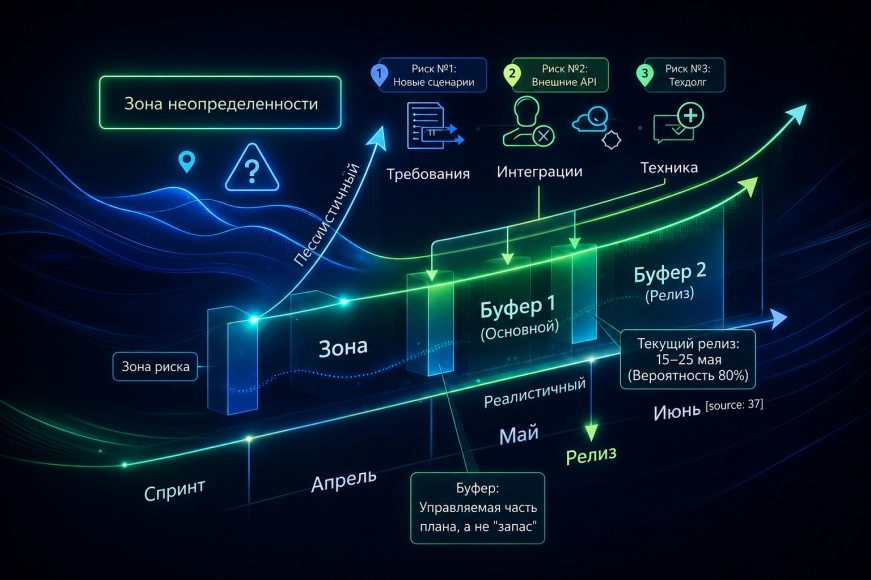
Mature teams work with ranges rather than a single date. For example: «with an 80% probability, the release will be between May 15 and 25».
Why velocity is more important than «person-hours»
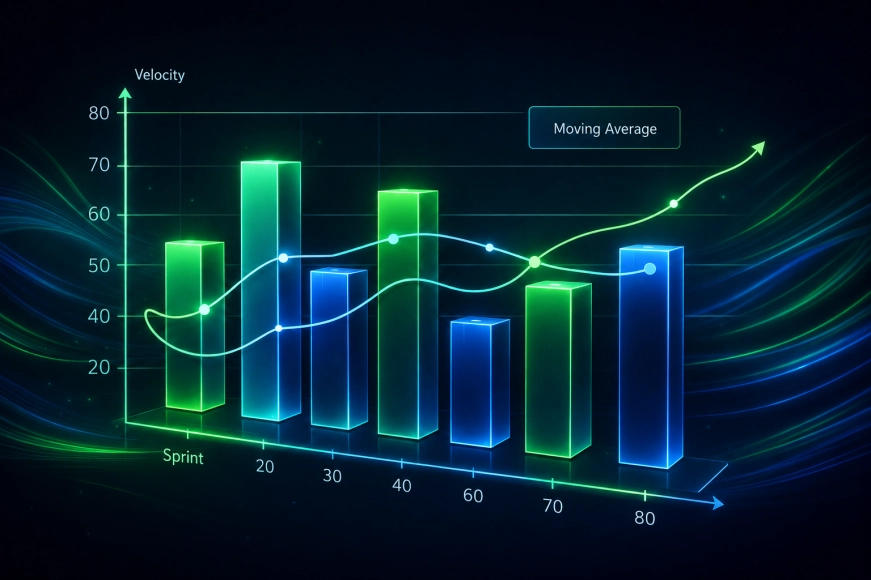
In modern teams, abstract person-hours are becoming less common. It is much more reliable to use the actual velocity of the team (velocity).
Velocity shows:
- how many tasks the team actually completes per iteration;
- how task complexity affects it;
- how performance changes over time.
Using historical data makes the forecast not perfect, but realistic.
Risks: what is always forgotten to account for
One of the key skills of a PM is the ability to work with risks, not ignore them. Risks are not «if», but «when».
Typical risks:
- changes in requirements;
- delays from the client;
- external integrations;
- staff changes;
- technical limitations.
A professional forecast always includes buffer. Not as a "just in case" reserve, but as a managed part of the plan.
Table 2
Types of risks and their impact on timelines
|
Type of risk |
Example |
Impact |
|
Requirements |
New Scenarios |
+10–30% |
|
Integrations |
External APIs |
+5–20% |
|
Technology |
Legacy / Technical Debt |
+15–40% |
|
Communication |
Feedback delay |
+5–15% |
Communication with the client — part of the forecast
Even the most accurate forecast loses value if the client perceives it as a «guarantee». Managing expectations is a key part of the work.
Our team's practice shows that it is better to:
- explain in advance what the deadlines depend on;
- show scenarios «optimistic / realistic / pessimistic»;
- document changes in the scope of work;
- regularly review the forecast.
Once properly established communication reduces the number of conflicts significantly.
Why Agile does not eliminate forecasting
A common myth: «Agile does not need deadlines». In practice, Agile does not eliminate forecasting, but makes it iterative.
In Scrum, forecasting is clarified:
- after each sprint;
- based on actual data;
- taking into account the changed volume of work.
The RUSO team adheres to an approach where the forecast is a living document, not a static PDF at the beginning of the project.
When a forecast is considered good
A good forecast is not one that "hit the date". It is one that:
- allowed for management decisions;
- was clear to the customer;
- considered risks;
- was updated as the project changed.
In 2026, the timeline forecast is part of the product management system, not a formality.
Conclusions
Forecasting development timelines is a skill that is formed at the intersection of analytics, experience, and communication. It requires discipline, honesty, and a willingness to work with uncertainty.
The earlier a structure appears in the project, the higher the likelihood that the timelines will become manageable rather than unexpected.