


Identity in IT — not about visuals, but about a system of meanings
The identity of an IT company — is not a logo, not a color palette, and not a set of screens. It is a visual-meaning system that helps the market understand who you are, what makes you different, and what level of tasks you are capable of solving.
In 2026, identity in IT stops being a decorative element. It becomes part of the product, part of communication, and part of business strategy. Especially for companies that operate in the B2B, enterprise segment, or sell complex digital solutions.
Why identity is especially important for IT companies
The IT market is overloaded. Services are similar in description, technologies overlap, promises sound the same. In such conditions, identity becomes the first filter of trust.
Well-structured identity:
- creates a sense of maturity for the company;
- helps to stand out without loud statements;
- simplifies the sales of complex services;
- reduces the cognitive load on the client;
- enhances the perception of expertise even before the first dialogue.
Poor or superficial branding, on the contrary, creates a sense of chaos, instability, and a "studio" level, even if there is a strong team inside.
Where the creation of an IT company's branding begins
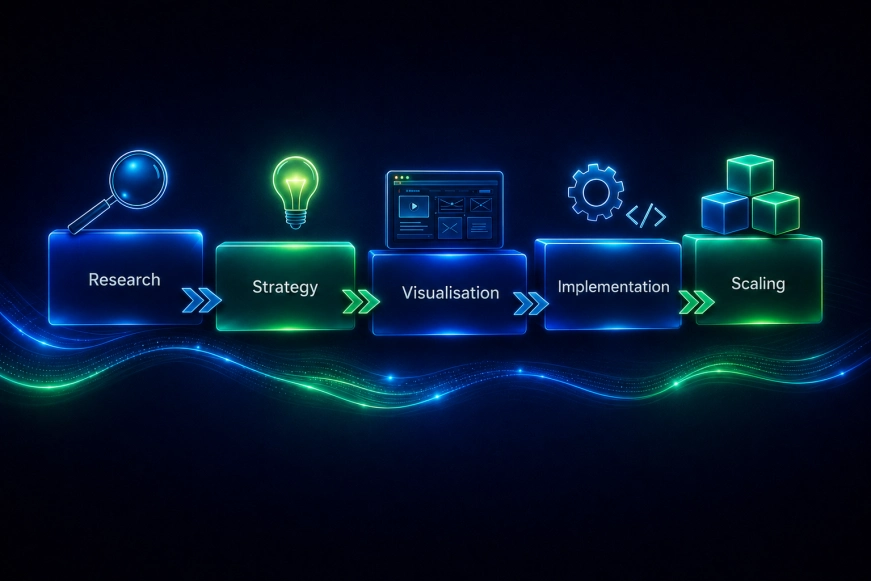
Branding never starts with design. It starts with analysis.
Before the visual part, work is carried out at several levels:
- business goals of the company;
- market positioning;
- type of clients and their expectations;
- competitive environment;
- internal culture and processes;
- stage of company development (growth, scaling, repackaging).
Without this, any visual system will be random.
Brand Core: the foundation of the entire identity
At the heart of the identity lies the brand core. This is not marketing text, but a set of clear internal anchors that define all visual and communication solutions.
The brand core includes:
- company values;
- brand character;
- tone of communication;
- attitude towards the client;
- the company's role in projects (executor, partner, integrator, consultant).
In IT, it is especially important to define what you are really about: speed, depth, reliability, scale, expertise, innovation, or a product approach.
Visual language: not «beautiful», but «recognizable and appropriate»
Once the brand core is formed, work begins on the visual language. Here the key task is — not to surprise, but to create a sustainable and scalable system.
In the identity of IT companies, the following are usually developed:
- logo and its behavior;
- color system;
- typography;
- graphic elements;
- principles for working with illustrations and 3D;
- rules for using visuals in interfaces and marketing.
It is important for the visual system:
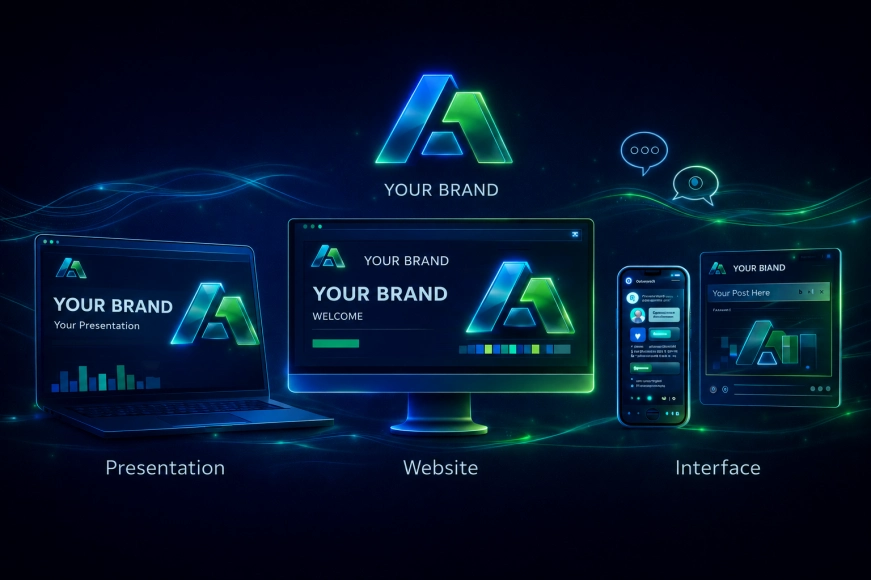
- to work equally well in presentations, on the website, and in the product;
- not to break when scaling;
- not to depend on a single designer.
Branding and product: where they intersect
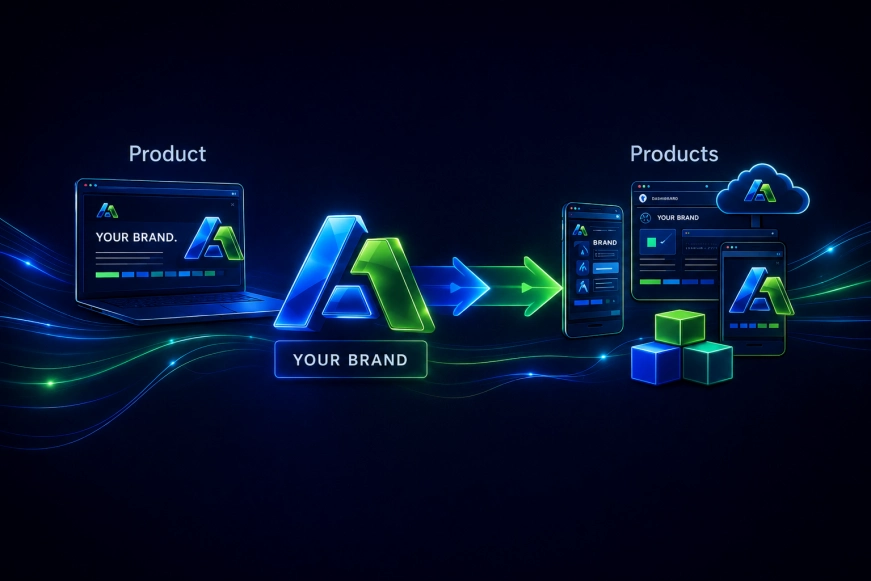
For an IT company, branding does not end with marketing. It must be connected to the product or service.
This means:
- a unified visual language between the website and interfaces;
- agreed UX approach;
- visual support for complex scenarios;
- consistent tone in communication and product.
When the identity is not embedded in the product, a gap arises between the promise and the actual user experience.
Common mistakes in creating identity in IT
Over the years, our team has seen typical mistakes that significantly reduce the effect of identity:
- copying competitors' visuals;
- focusing only on "trendy";
- lack of system and rules;
- product and UX neglect;
- visual mismatch with client level;
- branding without strategy.
As a result, the brand quickly becomes outdated or requires a complete overhaul in just 1–2 years.
Scaling identity: maturity check
True identity manifests itself when scaling:
- team growth;
- entry into new markets;
- launch of new products;
- complexity of communications.
If the system withstands these changes — the identity has been created correctly. If it starts to "fall apart" — then it was initially too superficial.
The role of the team in creating identity
The identity of an IT company is not created by a designer alone. It is a collaborative effort:
- analysts,
- designers,
- UX specialists,
- strategists,
- product managers.
Only with this approach does the identity become not a "wrapper," but a working tool of the business. This is how the RUSO team approaches it when working with the identity of IT products and service companies.
Conclusion
The identity of an IT company is an investment in trust, scalability, and long-term positioning. It works when it is based on strategy, supports the product, and withstands the company's growth.
In 2026, it is not the brightest brands that win, but the most systematic ones.