


Why communication is not a soft skill, but a management tool
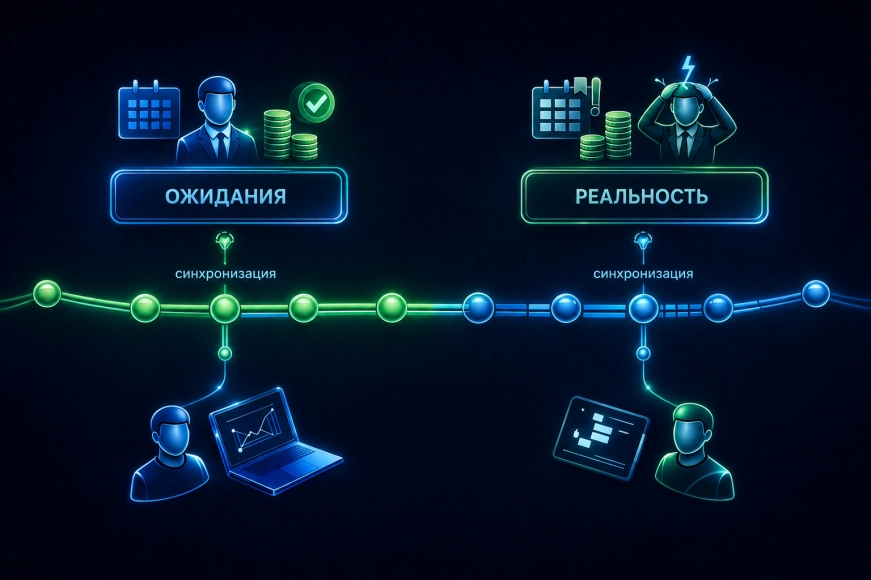
In IT projects, problems rarely arise due to technology. Much more often, the source of failures becomes the expectations that were not documented, the agreements that were understood differently, and the decisions that were not discussed in time.
Communication with the client is not about "pleasant conversation" or politeness for the sake of politeness. In mature teams, it is a full-fledged management tool that affects deadlines, budget, quality, and the final perception of the result.
Over the years of working on digital products, our team has seen dozens of scenarios where the same project, under the same conditions, could end either in a long-term partnership or in conflict — solely due to communication.
Below are 10 rules that allow you to build working, transparent, and predictable relationships with the client.

Rule 1. Document agreements in writing
Verbal agreements do not exist. Everything that is not documented is interpreted differently.
This is not about bureaucracy, but about reducing risks:
- deadlines,
- scope of work,
- priorities,
- areas of responsibility.
After each meeting, call, or discussion, there should be a brief record: what was decided, what we will do next, who is responsible.
Rule 2. Speak the language of business, not technology
The client is not interested in frameworks and architectural patterns, but:
- results,
- risks,
- deadlines,
- cost of changes.
Even in technical discussions, it is useful to translate solutions into a business context: why we are doing this and how it affects the product.
Rule 3. Discuss risks in advance, not after the fact
Silence about risks is almost always perceived as hiding problems.
If there is:
- uncertainty,
- dependency on third parties,
- potential difficulties,
— this needs to be discussed right away. The client perceives the risk stated in advance much more calmly than a problem they learn about at the last moment.
Rule 4. Manage expectations, not promises
Promises like «we'll do it faster», «we'll make it», «no problem» — are a direct path to conflicts.
Mature communication is built around managing expectations:
- what can realistically be done,
- what compromises are possible,
- which solutions will require additional resources.
Rule 5. Assign a single point of contact for communication
Communication "everyone with everyone" destroys the project.
There should be one responsible person from the team and one from the client:
- collecting questions,
- making decisions,
- filtering incoming information.
This reduces noise, speeds up decision-making, and prevents conflicting agreements.

Rule 6. Regularity is more important than the volume of information
Short but regular updates are better than rare and overloaded reports.
Even if there are no critical news, regular communication:
- creates a sense of control,
- reduces anxiety,
- builds trust.
Rule 7. Do not avoid difficult conversations
Problems do not disappear if they are not discussed.
Difficult topics:
- deadline extensions,
- budget overspending,
- change of priorities,
— must be raised immediately, not after the situation has become irreversible.
Rule 8. Document changes and their consequences
Any change affects at least one parameter:
- deadline,
- cost,
- volume,
- quality.
It is important not just to accept the change, but to discuss its consequences and document them.
|
Type of change |
Impact on deadlines |
Impact on budget |
Risk |
|
New functionality |
Increase |
Increase |
Average |
|
Change of logic |
Delays |
Increase |
High |
|
Cosmetic adjustments |
Minimal |
Insignificant |
Low |
|
Change of requirements |
Significant |
Significant |
Critical |
Projects — are stressful. Especially in the final stages.
Important:
- do not argue based on emotions,
- return to the facts,
- rely on agreements and project goals.
This helps maintain working relationships even in tense situations.
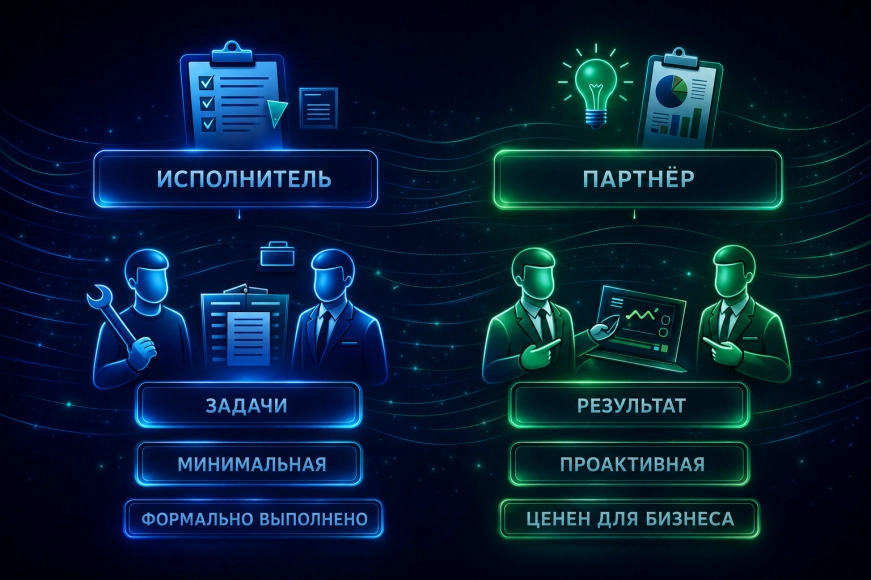
Rule 10. Build a partnership, not just "fulfillment of the terms of reference"
The best projects come from where the team acts not just as an executor, but as a partner who:
- asks questions,
- offers solutions,
- helps the client make informed decisions.
This is the approach we apply in the RUSO team when working with long-term digital products.
|
Criterion |
Executor |
Partner |
|
Role |
Fulfills according to the specifications |
Helps in decision making |
|
Responsibility |
For tasks |
For results |
|
Initiative |
Minimum |
Proactive |
|
Result |
Formally completed |
Valuable for business |
Communication with the client is a systematic job, not a set of random conversations. Clear agreements, transparency, regular communication, and the ability to talk about complex issues are the foundation of a successful IT project.
Projects where communication is consciously structured are less likely to exceed the budget, make decisions faster, and more often turn into long-term partnerships.