


Introduction: DevOps in 2026 — is not a set of tools, but a system
By 2026, DevOps has ceased to be an additional practice for accelerating releases. Today it is a foundation of engineering infrastructure that directly affects product stability, development speed, and total cost of ownership of the system.
Modern DevOps tools solve not only automation tasks but also provide observability, manageability, and security of digital products. The main challenge lies not in choosing a specific tool, but in building a holistic DevOps ecosystem tailored to the scale, team, and business goals of the product.
Our team regularly encounters situations where projects use dozens of tools but do not achieve the expected effect. The reason is the lack of a systematic approach and understanding of the role of each tool in the overall product lifecycle.
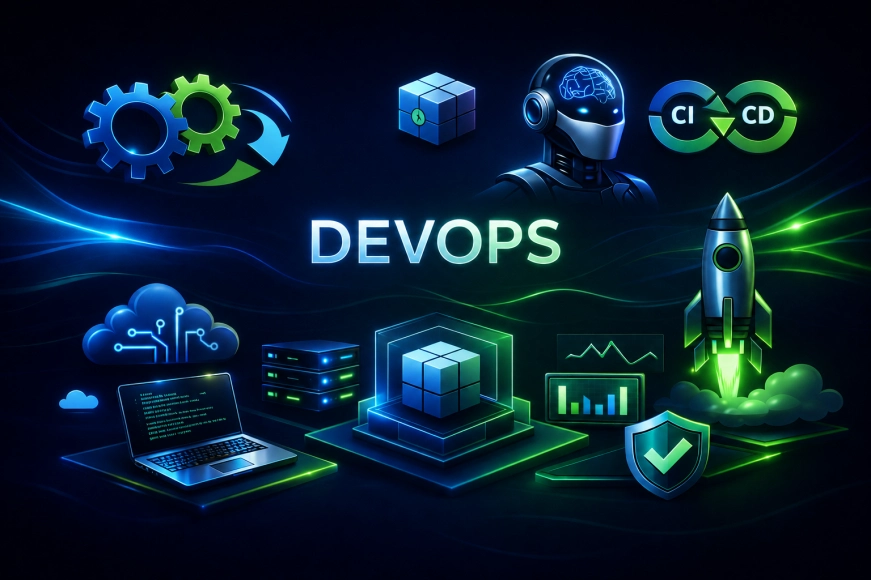
The Evolution of the DevOps Approach: from CI/CD to Platform Engineering
The DevOps approach began with the automation of build and deployment. In 2026, it encompasses the entire lifecycle of a web product: from development and testing to monitoring, scaling, and incident response.
Modern DevOps includes:
- infrastructure automation,
- configuration management,
- observability,
- security,
- support for scalable architectures,
- integration of AI tools for process analysis and optimization.
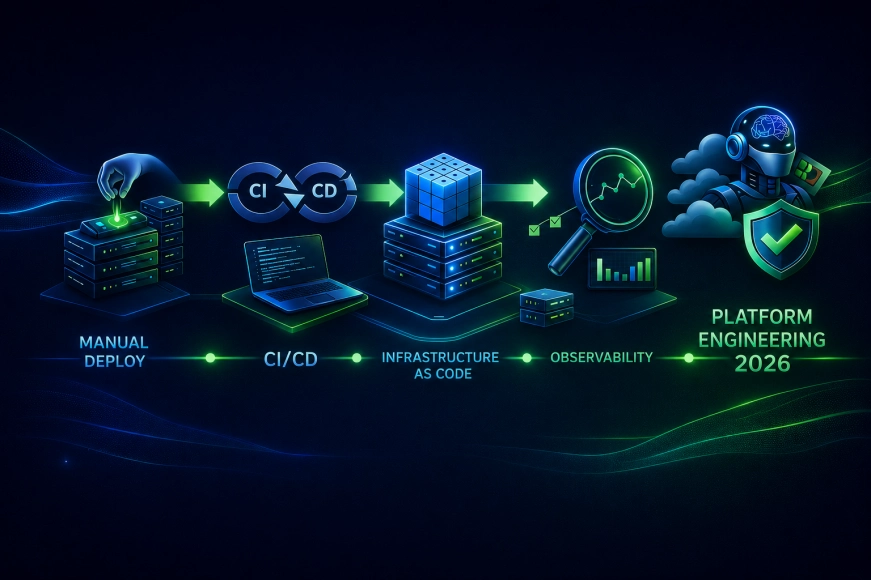
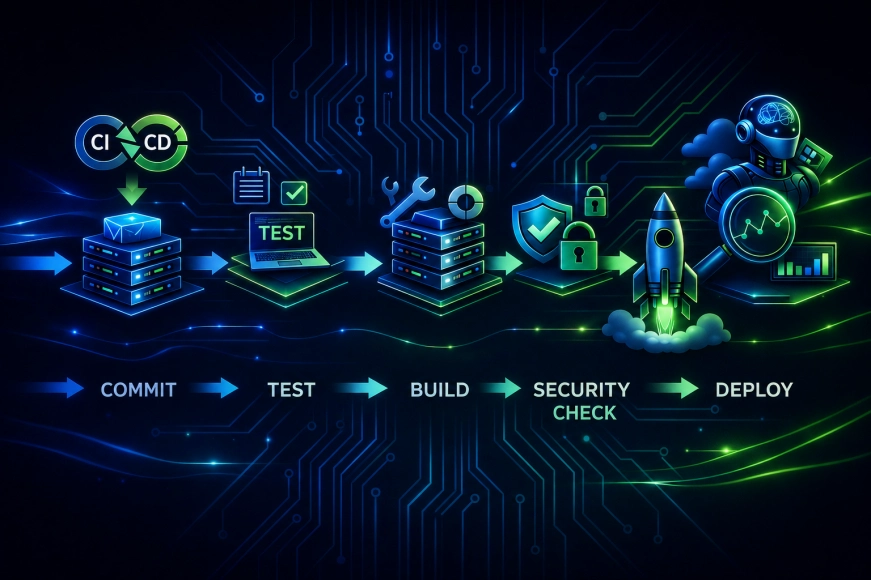
CI/CD as the Foundation of the DevOps Ecosystem
CI/CD remains the core of the DevOps infrastructure. However, in 2026, its role has changed: it is not just a code delivery pipeline, but a change management center in the product.
Modern CI/CD tools allow:
- to automate testing at all levels,
- to control code quality,
- to minimize release risks,
- to ensure frequent and predictable delivery of functionality.
Popular solutions are evolving towards flexibility, integration with cloud platforms, and support for complex architectures, including microservices and modular monoliths.
Infrastructure as Code (IaC): manageability instead of manual configuration
Infrastructure as Code in 2026 — a mandatory standard for mature teams. Manual configuration of servers and environments is becoming a source of errors, technical debt, and instability.
Using the IaC approach allows:
- to reproduce environments,
- to manage infrastructure as code,
- to scale systems predictably,
- reduce dependence on individual specialists.
📊 Table 1. Manual Infrastructure vs Infrastructure as Code
|
Criterion |
Manual Configuration |
Infrastructure as Code |
|
Reproducibility |
Low |
High |
|
Errors |
Frequent |
Controlled |
|
Scaling |
Complex |
Automated |
|
Change audit |
Missing |
Transparent |
|
Support cost |
Growing |
Predictable |
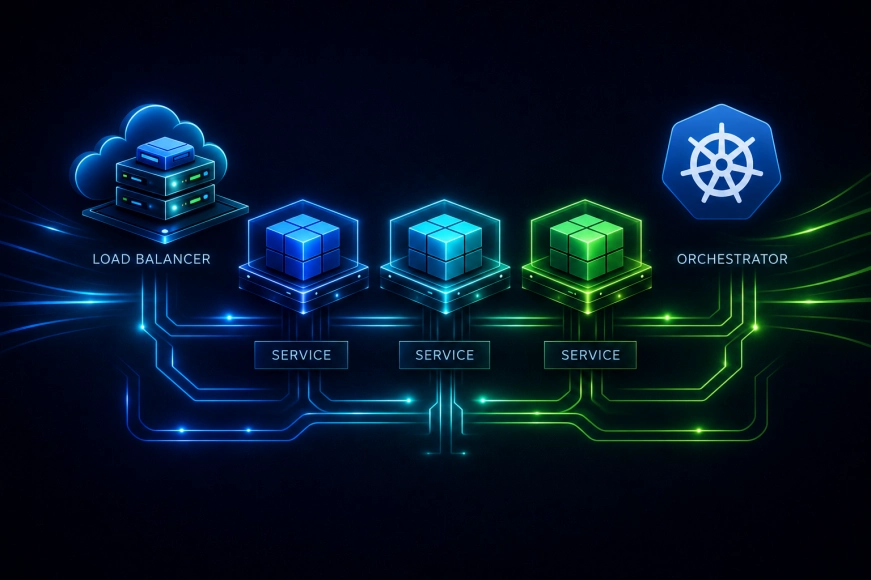
Containerization and orchestration: the standard of modern infrastructure
Containers have become the basic way of packaging applications. By 2026, almost all modern web products use containerization to simplify deployment and scaling.
Container orchestration allows:
- to manage complex systems,
- to automatically scale services,
- to increase fault tolerance,
- to optimize resource usage.
However, containerization requires a mature DevOps culture. Without observability and proper architecture, it can complicate the system instead of simplifying it.
Observability: seeing the system as a whole
In 2026, monitoring will cease to be just a set of graphs. The focus will shift to observability — the ability to understand the internal state of the system through its external manifestations.
Modern DevOps tools allow:
- to track metrics,
- to analyze logs,
- to build request traces,
- identify bottlenecks before they become a problem.
Without observability, it is impossible to manage complex distributed systems, especially with the active use of microservices and AI components.
📊 Table 2. Monitoring vs Observability
|
Criterion |
Classic Monitoring |
Observability |
|
Approach |
Reactive |
Proactive |
|
Context |
Limited |
Full |
|
Root Cause Analysis |
Complex |
Systemic |
|
Incident Management |
Slow |
Fast |
|
Support for complex systems |
Limited |
High |
Security as part of the DevOps process
In 2026, security will be integrated directly into DevOps processes. The DevSecOps approach allows for identifying vulnerabilities at early stages and reducing exploitation risks.
Modern tools automate:
- dependency checking,
- code analysis,
- configuration control,
- access management.
This is especially important in the context of frequent releases and distributed teams.
The Role of AI in DevOps Tools
Artificial intelligence is increasingly used in DevOps infrastructure: from log analysis to incident prediction. However, AI does not replace engineers but enhances their capabilities.
AI tools help:
- detect anomalies,
- optimize resources,
- reduce noise in alerts,
- accelerate problem diagnosis.
The key factor remains the quality of data and process architecture. Without them, AI becomes a source of false positives.
How to choose DevOps tools for a specific project
The choice of DevOps tools depends on:
- the scale of the product,
- the maturity of the team,
- the architecture of the system,
- security and reliability requirements.
Our team always starts with an analysis of the current state of infrastructure and business goals. This allows us to build a DevOps ecosystem that truly accelerates development rather than creating additional complexity.
Modern DevOps tools in 2026 are not just a set of technologies, but the foundation of stable and scalable development. Their effectiveness is determined not by quantity, but by how well they are integrated into the product architecture and team processes.
A well-structured DevOps ecosystem allows for:
- accelerating releases,
- reduce technical debt,
- increase reliability,
- support product growth.