


Why project managers' mistakes are costly
In IT projects, the role of the Project Manager has long gone beyond just controlling deadlines and tasks. The PM is responsible for communication, client expectations, team performance, and ultimately, the project outcome. Mistakes at this level are rarely localized—they almost always scale and affect the budget, timelines, and client trust.
In this article, we will discuss key PM mistakes that we regularly see in IT projects, and practical ways to avoid them. The material is aimed at managers working with digital products, web and mobile development, design, and complex IT solutions.
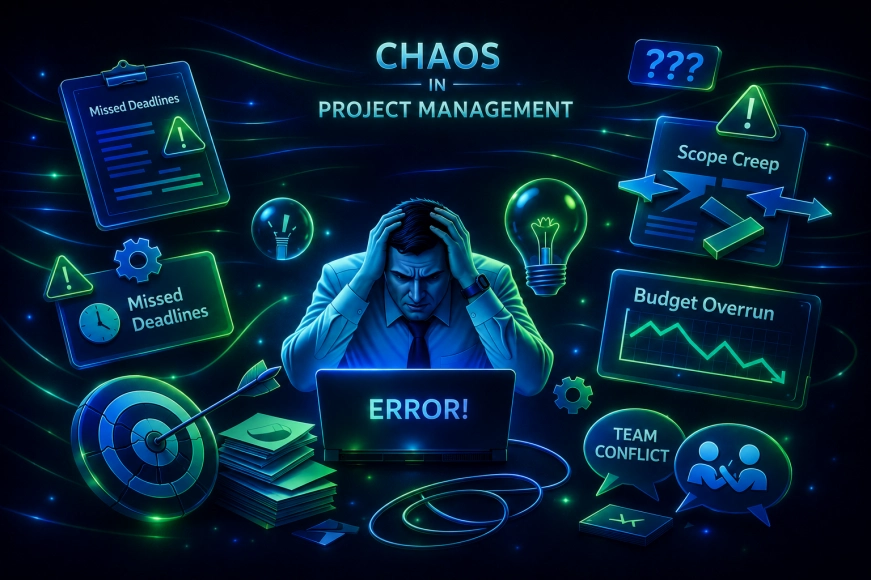
Mistake #1. Unclear project goals
One of the most common mistakes is starting a project without a clear answer to the question "why." Formally, goals may be stated, but in practice, they are often vague: "make a website," "update the design," "launch an application."
The problem is that without specific business goals, the PM cannot:
- correctly prioritize,
- explain to the team why some tasks are more important than others,
- make decisions under constraints.
How to avoid:
The PM must establish measurable goals at the start: performance indicators, business outcomes, constraints. This is the foundation for all subsequent decisions.
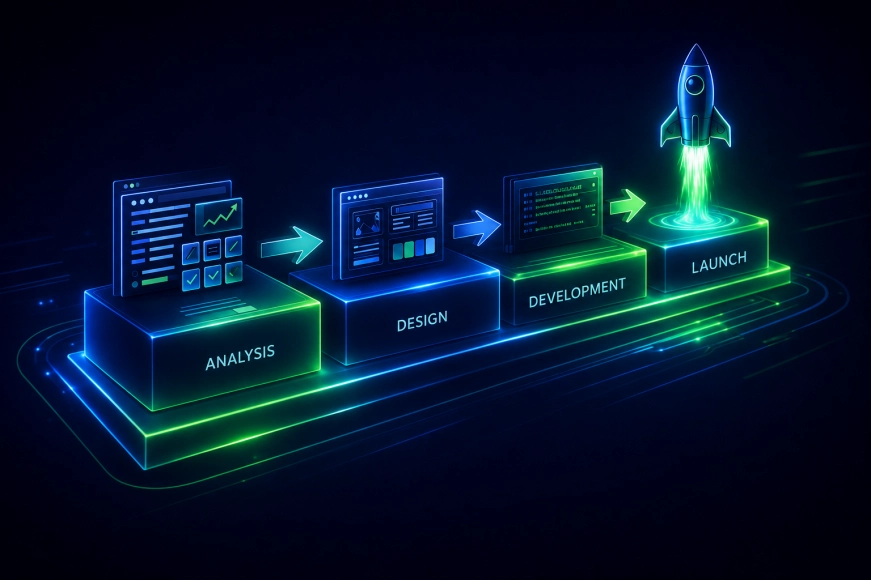
Error #2. Ignoring the analytics phase
The desire to "start development sooner" often leads to skipping or formally conducting analytics. As a result, the team works with incomplete requirements, and the project begins to "drift" in the early iterations.
The lack of quality analytics leads to:
- constant adjustments,
- increasing technical debt,
- conflicts with the client due to expectations.
How to avoid:
PM should protect the analytics phase from the client and within the team. Even in short projects, it is necessary to document requirements, scenarios, and constraints.
Error #3. Poor management of client expectations
One of the most painful areas is the mismatch of expectations. The client expects one result, the team delivers another, and the PM finds themselves between two fires.
Often the problem is not in the development, but in the fact that expectations:
- were not discussed,
- were not recorded,
- changed but were not documented.
How to avoid:
PM should regularly synchronize expectations: demos, reports, interim approvals. Everything important should be documented.
Error No. 4. Lack of risk management
Many PMs start thinking about risks when they have already occurred. In IT projects, risks are predictable: deadlines, resources, changes in requirements, technical constraints.
Ignoring risks leads to:
- missed deadlines,
- budget overspending,
- stress in the team.
Table
Typical IT project risks
|
Risk |
Cause |
Consequence |
|
Change of requirements |
No fixation of scope |
Increase in deadlines |
|
Loss of key specialist |
No reserve |
Work stoppage |
|
Technical limitations |
Insufficient analytics |
Rewriting |
|
Communication failures |
No regular syncs |
Conflicts |
How to avoid:
The PM should maintain a risk list, update it regularly, and discuss risks with the client and the team in advance.

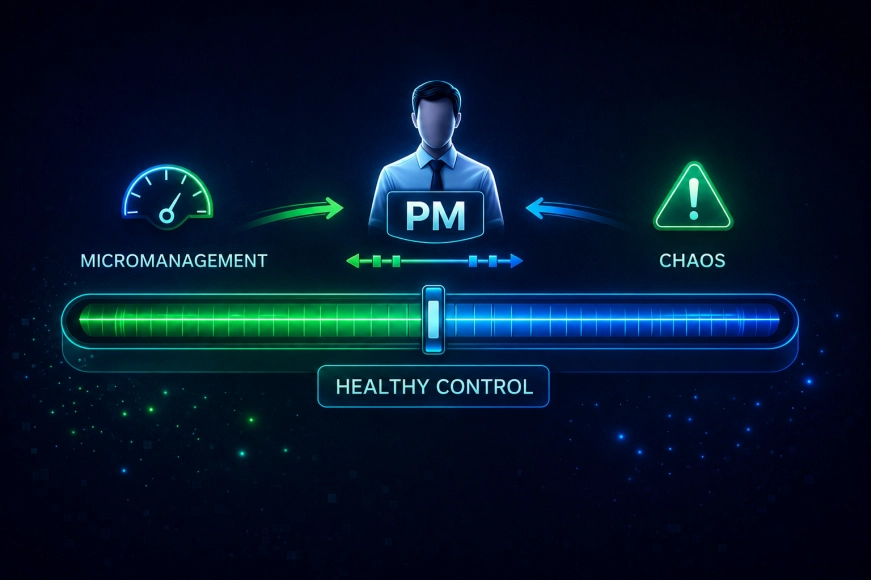
Error #5. Micromanagement or its absence
The PM can easily fall into one of the extremes:
- complete micromanagement,
- complete lack of control.
Both options harm the project. In the first case, the team loses motivation, in the second — tasks begin to "get lost".
How to avoid:
Set up transparent processes: statuses, checkpoints, clear readiness criteria. Control should be systematic, not manual.
Error #6. Weak communication within the team
The PM is the link between roles. If communication is poorly established, the following arise:
- misunderstandings,
- conflicts,
- task duplication.
This is especially critical in distributed teams.
How to avoid:
Regular syncs, clear communication channels, transparent decisions. The PM must monitor not only tasks but also the context.
Error #7. Ignoring the technical side of the project
The project manager is not required to be a developer, but they must understand basic technical principles. The lack of this understanding leads to unrealistic deadlines and solutions.
How to avoid:
The PM should constantly improve their technical literacy and work closely with the tech lead.
Error No. 8. Lack of retrospectives and working on mistakes
Many projects end without analyzing the results. As a result, the same mistakes are repeated over and over.
How to avoid:
Conduct retrospectives, document the conclusions, and implement changes in the processes.
Conclusions
PM mistakes are not a sign of weakness, but a part of growth. What is critical is not the absence of mistakes, but the ability to see, analyze, and prevent them in the future. Competent project management reduces risks, improves the quality of results, and strengthens client trust.