


Branding as a Business Tool, Not a «Beautiful Design»
In 2026, branding ceased to be a decorative element of marketing. For digital and IT companies, it became a full-fledged tool for influencing sales, conversion, and average check. Clients increasingly choose contractors not solely based on price or a list of technologies — the key factor becomes trust, which is formed long before the first contact with the sales department.
Branding works precisely in this area: it reduces uncertainty, simplifies choice, and helps the client make a decision faster. This is especially noticeable in the B2B segment, where deals are complex, lengthy, and require confidence in the partner.
How a Brand Builds Trust Before the First Contact
Most purchasing decisions in B2B are made before communicating with a manager. The client studies the website, case studies, visual style, tone of communication, and structure of information presentation. At this stage, the brand acts as a «silent seller».
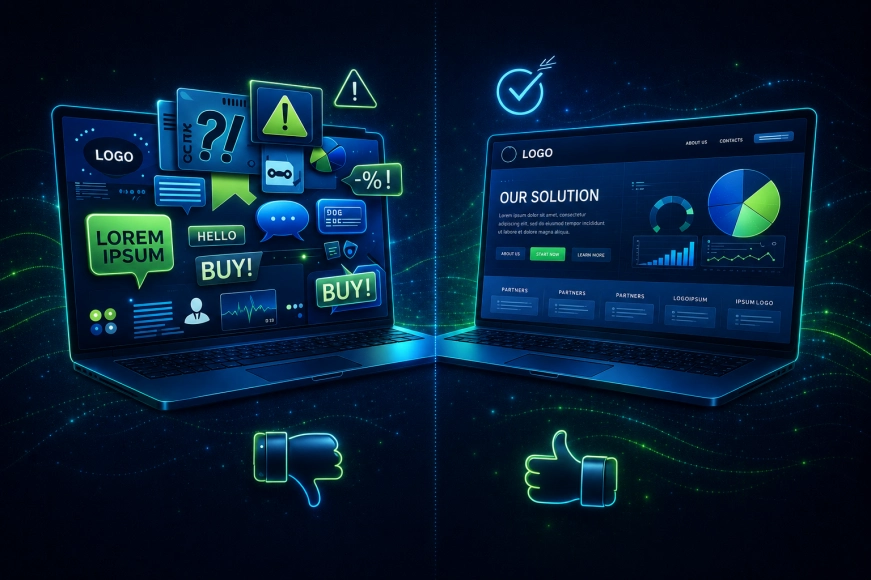
Clear identity, logical visual system, and unified communication style create a sense of maturity for the company. In contrast, fragmented design, outdated visual solutions, and lack of coherence raise doubts — even if there is strong technical expertise behind them.
It is important to understand: branding does not persuade with words, it persuades with feeling. This is an effect that is difficult to measure directly but can easily be seen in bounce rates, session duration, and conversions.
Branding and Price: Why Strong Brands Sell for More
One of the key effects of a strong brand is reduced price sensitivity. When a brand is built systematically, the client compares not the cost of services but the value of the partnership.
In the IT sector, this is especially important. A client rarely can objectively assess the quality of code or architectural solutions at the start. Therefore, they rely on indirect signals: visual language, presentation of cases, confidence in communication, and brand integrity.
Strong brand:
- justifies a higher price;
- reduces the amount of haggling;
- attracts customers focused on quality rather than the lowest price.
|
Indicator |
Weak brand |
Strong brand |
|
Average check |
Low |
Above market |
|
Price pressure |
High |
Minimal |
|
Deal length |
Long |
Shorter |
|
Trust at the start |
Low |
High |
|
Website conversion |
Below average |
Above average |
Branding as a filter for "non-our" clients
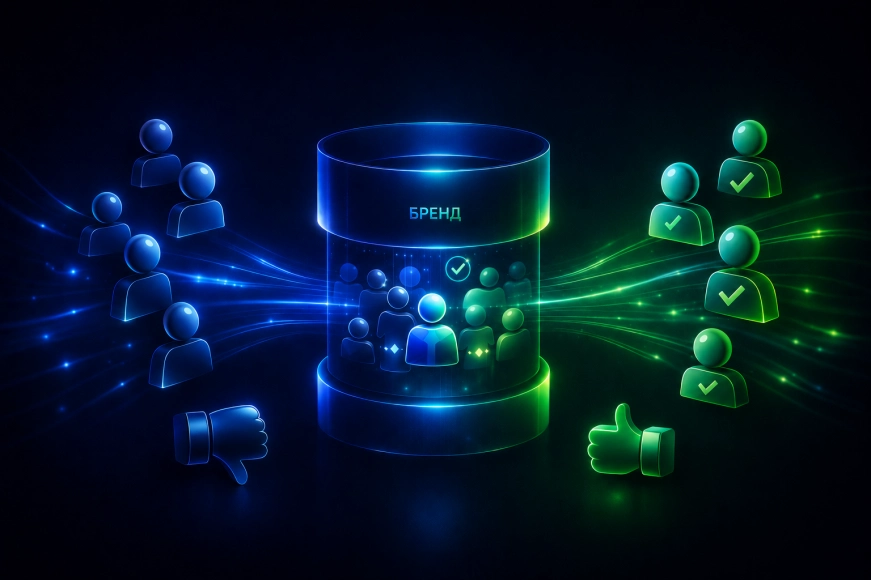
Another important function of branding is filtering out irrelevant inquiries. Clear identity and positioning help the company attract exactly those clients it wants to work with.
When the brand is not defined, the funnel fills with random leads: projects with unsuitable budgets, expectations, or levels of maturity. As a result, the sales burden increases and the overall business efficiency decreases.
Competent branding:
- forms correct expectations;
- reduces the number of "cold" and unsuitable leads;
- increases the quality of incoming requests.
The connection between branding and conversion in digital channels
In digital marketing, branding directly affects the metrics:
- CTR of advertising campaigns;
- cost per lead;
- the depth of website viewing;
- returns and repeat visits.
The same advertising message, placed on behalf of a strong brand, almost always shows better results. The reason is simple: the user is more willing to engage with someone they trust.
In the IT field, this is especially critical, as the decision-making cycle is long, and there are many touchpoints with the brand.—
Mistake: to consider branding as a "one-time project"
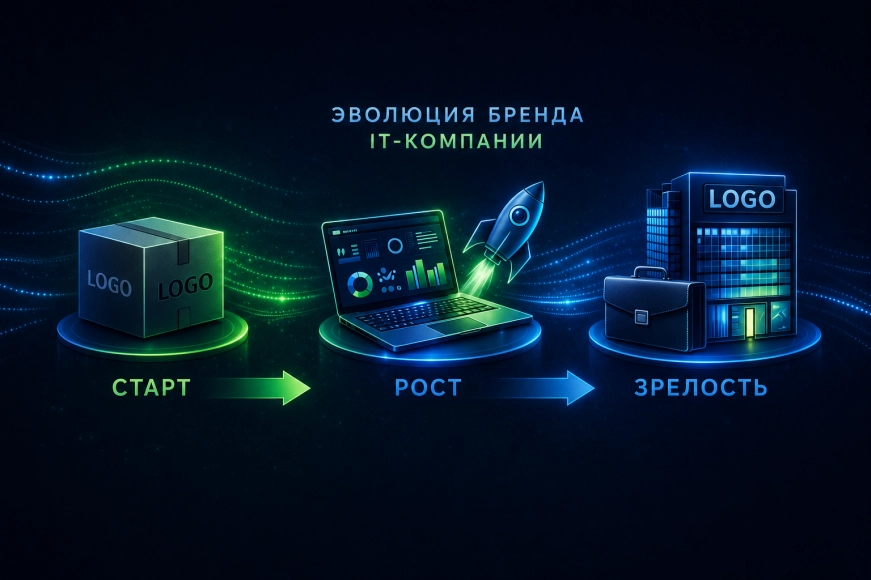
One of the most common mistakes is to perceive branding as a one-time task: logo, website, brand book — and then forget about it. In practice, a brand is a living tool that must evolve with the company.
If the brand is not updated:
- it ceases to reflect the real level of expertise;
- starts to conflict with the product;
- reduces the effectiveness of marketing and sales.
Therefore, mature IT companies regularly review positioning, visual language, and communications, synchronizing the brand with business goals.
How branding enhances the sales department's work
Branding does not replace sales, but makes their job easier. When the brand is built correctly:
- the manager does not need to «prove that the company is normal»;
- the conversation starts with the client's tasks, not with excuses;
- Presentations, proposals, and cases are taken more seriously.
In practice, this results in shorter negotiations and greater trust in the team's recommendations. In one of our projects, the RUSO team observed an increase in conversion to deals after updating the branding and website without changing the commercial conditions.
Branding and the Long-Term Value of a Company
A brand is an intangible asset that directly affects the capitalization of a business. Companies with a strong brand:
- scale more easily;
- attract partners and employees more easily;
- are more resilient in facing crises.
In the IT sector, where products and technologies change rapidly, the brand becomes an anchor of stability and recognition.
Conclusions
Branding in 2026 is not about aesthetics, but about business results. It affects sales, conversion, average check, and customer quality. Especially in the IT industry, where trust and expertise are more important than formal characteristics.
Companies that perceive branding as a strategic tool gain not just a beautiful image, but a sustainable competitive advantage.